
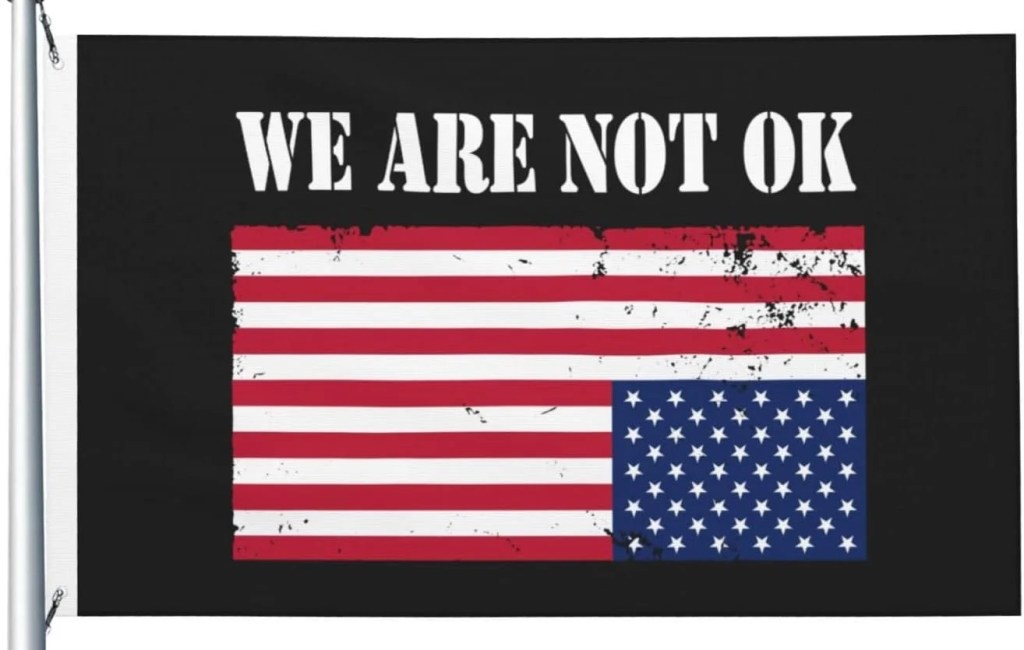
At 8:07 a.m. on a brisk spring morning, a college sophomore in Ohio opened her phone to find a headline she never thought she’d read: “Is America Still a Democracy?” It wasn’t a fringe blog or a partisan echo chamber—it was a question now echoing through dinner tables, congressional hearings, and the anxious corners of the internet. For millions of Americans, the fear is no longer abstract: the United States, the world’s oldest continuous democracy, may be inching toward the kind of government it has long warned others about. The signs are multiplying, and the unease is palpable.
Authoritarianism doesn’t typically arrive with tanks in the streets or martial law declarations. It creeps, subtle at first: a new rule here, an executive order there, a shift in the language of leaders who now speak of “enemies of the people” and “fake news.” According to experts tracking global trends, the symptoms are now familiar: rejecting the democratic rules of the game, denying the legitimacy of opponents, tolerating or encouraging political violence, and curtailing civil liberties, including press freedom and the right to protest. These are not mere hypotheticals—they are markers visible today in the American political arena (Commons Library).
A recent survey of more than 500 political scientists found a stark warning: the United States is moving “swiftly from liberal democracy toward some form of competitive authoritarianism,” a hybrid regime where democratic institutions exist but are routinely undermined by those in power (NPR). The survey’s findings land as Americans witness an administration that, regardless of party, faces accusations of overreach—unilateral executive actions, efforts to limit dissent, and policies that critics say test the boundaries of constitutional norms.
Under the current administration, allegations of authoritarian behavior have come from both left-leaning and right-leaning voices. Commentators from the Heritage Foundation, for example, have cited repeated attempts at “unilateral, unlawful border and immigration policy,” as well as sweeping COVID-era lockdowns, mask, and vaccine mandates as evidence of centralizing power at the expense of individual rights (Heritage Foundation). Detractors argue that such measures, even when justified by public health or national security, represent a dangerous precedent: a government that can override liberties for the sake of expediency.
Supporters of the administration counter that these moves are necessary responses to unprecedented challenges, from pandemics to foreign interference. They point to the White House’s stated commitment to “push back against the global erosion of democracy” and restore American leadership in a world where authoritarianism is on the rise (Vox). Yet critics warn that even well-intended policies, if unchecked, can become tools for consolidating power. The line between emergency measures and permanent restrictions, they argue, has never been thinner.
This tension is not unique to the United States. Across Western democracies, scholars have documented an alarming drift: authoritarian regimes have become more effective at circumventing the norms and institutions meant to support basic liberties (Freedom House). As polarization deepens and trust in government erodes, citizens become more willing to accept—or even demand—strongman tactics in the name of stability. “With democracy in trouble, understanding the reason why could hardly be more important,” notes one recent analysis from the University of Birmingham (University of Birmingham).
Domestically, the cracks in America’s democratic pillars are showing. The Brookings Institution warns that free elections, the rule of law, and anti-corruption efforts are under threat. These are not abstract concerns: they manifest in efforts to delegitimize electoral outcomes, pressure on judges and prosecutors, and a growing chorus of voices questioning the value of pluralism itself (Brookings). In this environment, the specter of “enemies within” becomes a powerful tool—one that authoritarian leaders throughout history have wielded to justify ever-greater control.
The Biden administration, for its part, has grounded its foreign policy in the idea that the world is locked in a struggle between democracies and autocracies (Carnegie Endowment). Yet at home, critics charge that the administration has not always lived up to its rhetoric. From efforts to reform the Supreme Court to controversial “disinformation” initiatives, the charge is that the government is increasingly willing to police speech and dissent—sometimes in the name of protecting democracy, but with effects that can chill debate and erode trust.
What separates a robust democracy from an authoritarian state is not simply the presence of elections or a written constitution. It’s the lived reality of checks and balances, an independent judiciary, a free press, and a public that can speak, organize, and protest without fear. When these guardrails weaken, the slide toward authoritarianism can be rapid and, at times, irreversible. “Authoritarian movements reject the foundational principles of constitutional democracy such as separation of powers and equality before the law,” warns a report from the Center for American Progress (American Progress).
The warning signs are clear to those willing to look. Political violence is now openly discussed as a tool for achieving policy goals. The legitimacy of opponents is routinely denied, not just by fringe actors but by mainstream politicians. Civil liberties are curtailed in the name of security. The press, once hailed as democracy’s watchdog, is now targeted by both verbal attacks and legal threats. Each of these steps, taken alone, may seem justified or even necessary; together, they form a pattern that historians recognize all too well (Commons Library).
Not all blame lies with the current administration. The drift toward illiberalism is a global phenomenon, fueled by technological change, economic anxiety, and a crisis of faith in democratic institutions. But the choices made by those in power matter. When government actors tolerate or encourage political violence, restrict the press, or use the machinery of state to target enemies, they do more than violate norms—they pave the way for future leaders who may go even further (Foreign Policy).
The American public is not powerless in the face of these challenges. History is replete with moments when citizens pushed back—through protest, litigation, and the ballot box—against overreach. But vigilance is not optional. The slide into authoritarianism is rarely abrupt; it happens one compromise, one rationalization, one overlooked violation at a time. The question now is not whether Americans should be afraid, but whether they will act before fear becomes regret.
In the end, democracy survives on more than laws and institutions; it depends on people who refuse to accept shortcuts, who demand transparency and accountability, and who understand that freedom cannot be preserved by those willing to sacrifice it for temporary comfort. The warning signs are flashing, and the hour is late. The fate of American democracy—perhaps democracy itself—may hinge on how this generation responds.


Leave a Reply