
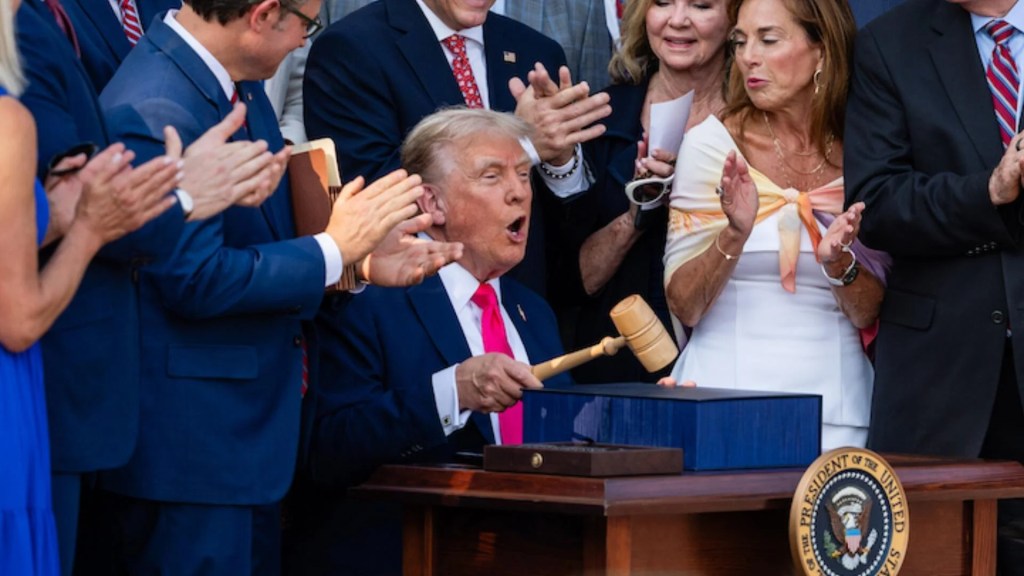
It started with fireworks—literal and political—on the White House lawn. On July 4, 2025, President Donald Trump signed what he triumphantly called “One Big Beautiful Bill” into law, a nearly 900-page behemoth promising sweeping tax cuts, historic shifts in federal spending, and a muscular assertion of hard-right priorities. The crowd at the signing ceremony cheered, but across the country, a different kind of spark was catching. For many American citizens, the bill represented not just another political win for the President but a turning point, one that critics warn will leave millions scrambling for basic support, and reshape the social contract in ways not seen for generations.
The crowd-pleasing toplines were bold: the largest tax cut in U.S. history, with the White House promising bigger paychecks—upward of $10,000 extra in annual take-home pay for the average family. The bill’s architects touted a future of “more money in Americans’ pockets,” thanks to tax exemptions on overtime, tips, and Social Security payments, and a $12.5 billion upgrade to the nation’s air traffic control system. For families welcoming a baby in 2025, the legislation included a new $1,000 “baby bonus” savings account, a one-time federal deposit meant to jump-start a new generation’s financial security White House, CNBC.
But behind the fanfare, the details told a more complicated story. The bill’s $4.5 trillion in tax cuts—solidifying and expanding those from Trump’s first term—came paired with deep spending reductions across the social safety net. Medicaid, food assistance, and other programs that tens of millions rely on faced substantial cuts, while funding for border security, immigration enforcement, and the military ballooned to historic highs. For those at the bottom of the economic ladder, the message was clear: the government’s support would shrink, and the burden of self-reliance would grow heavier than ever Los Angeles Times, CBS News, New York Times.
Economic analysts scrambled to model the impact. The top 20% of earners would see their net income jump by nearly $13,000 a year, thanks to a mix of tax cuts and regulatory rollbacks. But the Congressional Budget Office warned of a “reverse Robin Hood” effect: as the wealthiest Americans gained, millions in the middle and at the bottom would see benefits slashed or phased out. The bill’s temporary business tax breaks, like the full deduction for building new manufacturing facilities, could supercharge the corporate sector—yet with the cost of borrowing expected to rise, everyday Americans might soon find mortgages and car loans more expensive, and job security less certain CNN.
The scale of the legislation was itself a source of controversy. Packed into its nearly 900 pages were not just tax and spending provisions but a grab bag of Republican priorities. More than $46 billion was earmarked for border wall construction and related expenses, alongside $45 billion to expand detention capacity for migrants. Critics pointed to the bill’s vastly increased resources for immigration enforcement, which, according to policy analysts, would allow the administration to “swell a deportation force that makes no distinction between violent criminals and otherwise law-abiding undocumented immigrants” Global News, American Progress.
Healthcare, too, found itself at a crossroads. The bill’s cuts to Medicaid and other benefits, paired with regulatory changes, were projected to leave as many as 10 million more people uninsured by 2034, according to independent analyses. For older Americans, a temporary enhanced tax deduction would offer some relief, but the long-term outlook for public health support appeared grim. “This is a slow-motion disaster for the most vulnerable,” one healthcare economist remarked. “The uninsured rate will climb, and hospitals will be left to pick up the pieces, often at the expense of everyone else” CNN, Newsweek.
The bill’s supporters, both in Congress and among the public, hailed its passage as a “lifeline for working families.” They pointed to the removal of taxes on tips and overtime, extra relief for seniors, and the promise of bigger paychecks as proof that the legislation would reward hard work rather than punish it. “American families, workers, small businesses, and manufacturers will soon receive the largest tax cut in American history,” House Republicans declared in a statement, echoing Trump’s own rhetoric Ways and Means Committee.
Yet for many, the devil lay in the details. The bill’s new “baby bonus” was lauded as a bold move to support young families, but tax experts warned it would add administrative headaches, requiring families to track yet another small-dollar account for nearly two decades before the child could access it. Meanwhile, the permanent expansion of the Child Tax Credit was offset by reductions in other forms of support, meaning that some families would see little net benefit—or even lose ground Tax Foundation.
Civil rights advocates found little to celebrate. The bill’s expansion of immigration enforcement, coupled with reductions in social programs, was described by some as “an assault on the vulnerable.” Legal experts warned that the changes would make it easier to detain and deport immigrants, including longtime residents and families with deep roots in the United States. At the same time, the cuts to food assistance and Medicaid would disproportionately harm communities of color and those already struggling to make ends meet American Progress, The Guardian.
On Wall Street, the reaction was swift. Markets surged on news of the business tax breaks and regulatory rollbacks, but the nation’s ballooning deficit—expected to rise by more than $3 trillion over the next decade—set off alarm bells among economists and budget hawks. “We’re mortgaging the future for a fleeting sugar high,” warned one former Treasury official. The Federal Reserve signaled that higher interest rates might be necessary to offset the fiscal stimulus, further raising the cost of borrowing for businesses and families alike New York Times, CNN.
For everyday Americans, the reality of the “Big Beautiful Bill” would come into focus slowly. Paychecks would rise for some, but so too would medical bills, insurance premiums, and the cost of borrowing. For those who rely on Medicaid, food stamps, or other government programs, the coming months would bring hard choices: which prescriptions to fill, which meals to skip, which bills to pay late. Meanwhile, the specter of increased immigration enforcement would sow fear in communities across the country, leaving millions uncertain about what tomorrow might bring USA Facts, ABC News.
The bill’s passage capped a whirlwind legislative sprint. Trump, ever the showman, had staged a relentless campaign to sell the package, pushing skeptical lawmakers to fall in line and leveraging the July 4th holiday as a backdrop for his latest political triumph. But beneath the surface, divisions simmered. Even some Republicans privately worried that the bill’s size and complexity would obscure its most controversial provisions, making it harder for voters to understand the trade-offs at stake Washington Post, CNN.
As the ink dried on the President’s signature, the debate over the “Big Beautiful Bill” was just beginning. Lawsuits challenging parts of the legislation were already in the works. Governors in blue states vowed to fight back, promising to shore up social safety nets where federal support had been slashed. Across the country, advocacy groups began organizing, determined to push back against what they saw as an unprecedented attack on the nation’s most vulnerable.
In the end, the legacy of Trump’s “Big Beautiful Bill” may not be measured by the size of a tax cut or the length of a border wall, but by the ways it reshapes the daily lives of millions of Americans. For some, it will mean a fatter paycheck and a sense of pride in self-reliance. For others, it will mean harder choices, fewer options, and a future that feels just a little less secure. The battle lines are drawn—not just in Congress, but in neighborhoods, hospitals, and homes across the nation. And as the country grapples with the fallout, one thing is clear: the true cost of the “Big Beautiful Bill” will be counted not just in dollars, but in lives.


Leave a Reply